How AI Scribes Restore Presence in Mental Health
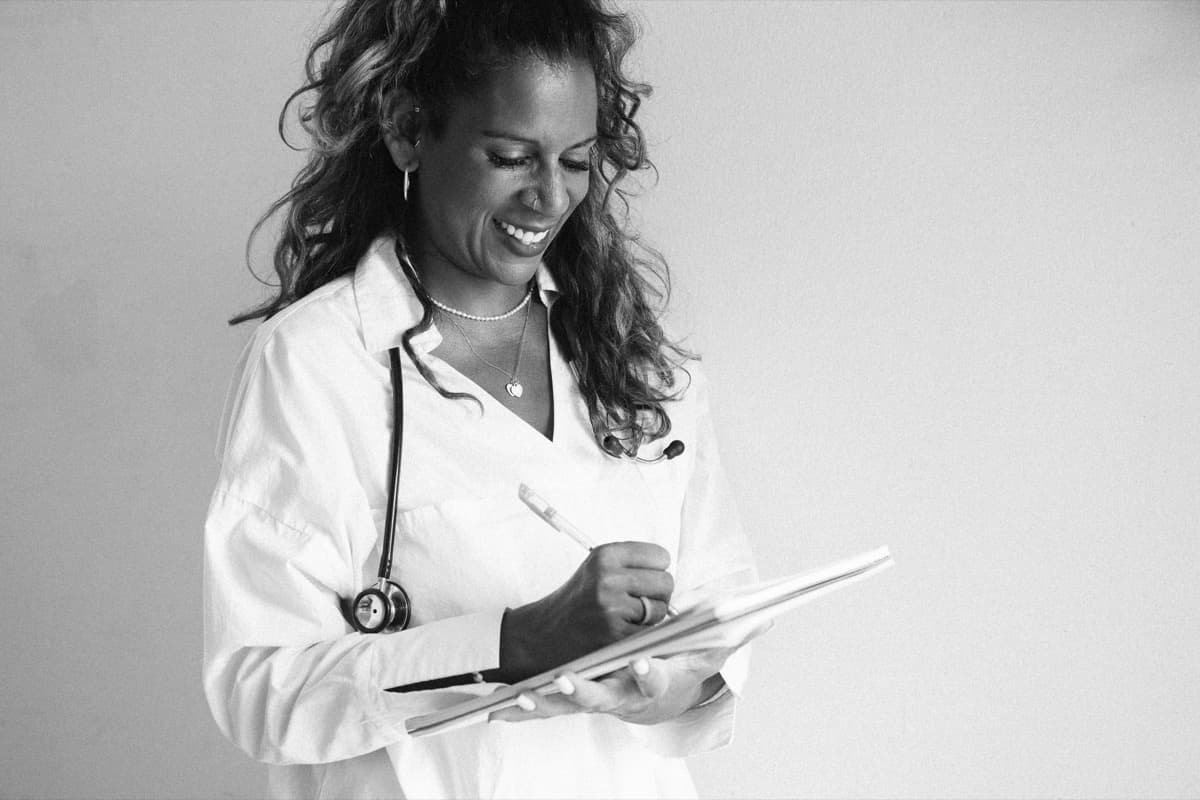
In mental health care, the most powerful tool a clinician possesses isn't a prescription pad, a monitor, or a manual. It is presence.
The ability to sit with a patient, observe non-verbal cues, and create a "container" of safety is what allows true healing to take root. Whether we are discussing ketamine-assisted therapy or integrative mental health management, the outcomes often hinge on the quality of the human connection in the room.
However, for the last two decades, a silent third party has entered the consultation room: The Computer Screen.
The rise of Electronic Health Records (EHRs) has forced many clinicians to split their attention. They must listen to a patient’s most vulnerable moments while simultaneously ensuring they are capturing the data required for compliance, safety, and insurance. This "administrative burden" is a leading cause of clinician burnout and, more importantly, it creates an invisible wall between the healer and the patient.
But a new wave of "Calm Technology" is changing this dynamic. Ambient AI Scribing is helping practitioners put down the keyboard and look up at the patient.
What is an AI Scribe?
Unlike the generative AI tools you might use to write emails, an AI Medical Scribe is a specialized tool designed to "listen" securely to a clinical session. It operates in the background, transcribing the conversation and—crucially—sorting that information into a professional medical note (such as a SOAP note).
The goal isn't for the AI to make medical decisions. The goal is to handle the data entry so the clinician can handle the care.
For mental health specifically, this is revolutionary. In other medical fields, data is often numerical (blood pressure, heart rate). In mental health, the data is the narrative—the story, the emotion, and the flow of thought. Capturing this without breaking eye contact has always been a challenge, until now.
The Landscape: Top AI Scribes for Mental Health
At Isha Health, we stay on the cutting edge of technology to ensure our patients receive the most focused care possible. We have observed several key players emerging in this space, each offering different approaches to solving the "documentation problem."
Here is an objective look at some of the leading options available to clinicians today:
1. DeepScribe
One of the heavy hitters in the industry, DeepScribe is often favored by large hospital systems. It uses a combination of AI and human quality assurance to ensure accuracy. It is robust and highly customizable, often seen in complex specialties like oncology or cardiology where medical coding is dense.
- Best for: Large hospital networks and multi-specialty clinics.
2. Moco the Scribe
While many tools focus heavily on billing codes and revenue cycles, Moco the Scribe has gained attention for its focus on the narrative. In mental health, the nuance of a session matters. Moco was built with a philosophy of "calm," designed to be a non-intrusive witness to the therapeutic process. It excels at capturing the qualitative details of a session—the mood, the breakthrough moments, and the patient's specific language—without feeling "robotic."
- Best for: Mental health professionals, therapists, and integrative practitioners who prioritize the patient story over complex billing automation.
3. Freed
Freed has become popular for its "low friction" approach. It is designed to be incredibly easy to start—often requiring no complex IT setup. It acts almost like a smart dictation tool that learns the clinician's style over time. It is a favorite among solo practitioners who need an affordable, immediate solution to the paperwork pile.
- Best for: Solo practitioners and generalists looking for a quick, plug-and-play solution.
4. Ambience Healthcare
Ambience is positioned as an "operating system" for healthcare organizations. It integrates deeply into major EHRs like Epic and Cerner. It is less of a simple scribe and more of a comprehensive workflow tool that helps with coding, referrals, and pre-charting.
- Best for: Enterprise-level healthcare systems requiring deep EHR integration.
Why This Matters for the Patient
You might be wondering: Why should a patient care what software their doctor uses?
The answer is simple: Attention.
When a clinician utilizes an ambient scribe, the dynamic of the room changes.
- More Eye Contact: We aren't looking down to type; we are looking at you.
- Better Listening: We don't have to interrupt your flow to ask you to "hold on while I get that down."
- Reduced Burnout: A clinician who isn't drowning in paperwork is a clinician who shows up to your session with more energy, empathy, and patience.
The Future of Connection
At Isha Health, we believe the future of medicine isn't about technology replacing humans. It's about technology supporting humans.
By embracing tools that handle the "busy work" of medicine, we protect the most sacred part of our practice: the time we spend connecting with you. Whether it is through the use of Moco the Scribe to capture our notes, or advanced telehealth platforms to bring care to your home, our goal remains the same.
We use technology to be more present, not less.
Related Articles
- How Does Ketamine-Assisted Psychotherapy Work?
- Ketamine-Assisted Psychotherapy: Combined Modality Outcomes
- Why a Therapist Is Essential for Ketamine Treatment
If you're considering ketamine therapy, check your availability →
88.8% of Isha Health patients with moderate-to-severe depression show measurable improvement
Based on 546 patients and 1,900+ validated assessments. See our clinical outcomes →