The 40-Year Antidepressant Plateau: APA 2026 Findings
TL;DR
- Modern antidepressants work only modestly better than a placebo (sugar pill) — by about 10-15% in response rates. This gap has not improved across three generations of drugs over 40 years.
- About 33% of patients reach remission with their first antidepressant. Of those who don't, the response rate keeps declining with each subsequent medication tried.
- Patients know this. Psychiatrists underestimate it. In one survey, 30% of patients said they felt frustrated with their antidepressant. Psychiatrists estimated only 11%.
- The field is starting to use a new term — "Difficult-to-Treat Depression" — to replace "Treatment-Resistant Depression" — because the old term made the patient sound like the problem.
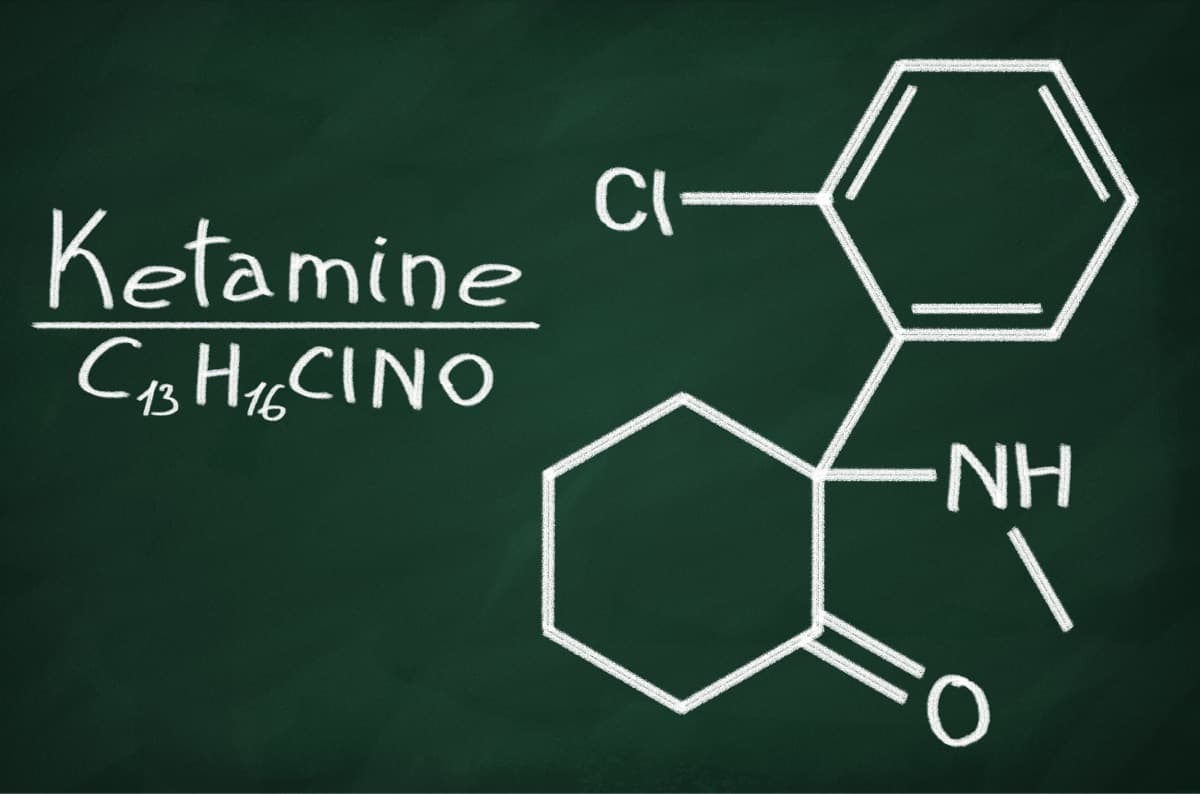
- Ketamine, esketamine (Spravato), and brain stimulation therapies now sit in the middle of the treatment ladder — not at the bottom. For someone who's failed two antidepressants, these are the next reasonable conversations.
This is part of a series of patient-facing posts translating what was discussed at the American Psychiatric Association's 2026 Annual Meeting.
The speaker, and why he matters
Michael Thase, MD has been a leading researcher in depression for four decades. He's a professor of psychiatry at the University of Pennsylvania and the Philadelphia VA Medical Center. He co-authored the original 1997 "Thase-Rush staging" system that's still used to classify how treatment-resistant a patient's depression is. He runs the major clinical trials. If anyone is in a position to evaluate where antidepressant therapy actually stands, it's him.
At APA 2026, he gave a plenary talk titled "Current Perspectives on Treatment Resistant Depression." The talk was, in retrospect, a remarkably honest reckoning with the limits of current care.
The chart every patient deserves to see
Thase showed a chart that I've been thinking about ever since. It compared response rates across three generations of antidepressants:
| Era of antidepressant | Drug response rate | Placebo response rate |
|---|---|---|
| 1980s (tricyclics, MAOIs) | 55% | 33% |
| 1990s (SSRIs — Prozac, Zoloft) | 54% | 37% |
| 2000s (SNRIs — Effexor, Cymbalta) | 53% | 41% |
| Pooled across all eras | 54% | 37% |
(Source: Thase presentation citing Han et al., Expert Rev Neurother 2013; Papakostas & Fava, Eur Neuropsychopharmacol 2009.)
A few things stand out:
- The drug response rate has barely changed in 40 years. Three generations of new drugs, billions in research, and we're hovering around 53-55%.
- The placebo response has increased. This is partly a measurement artifact (clinical trials have changed) but it's also real — modern trials are better at generating positive expectations.
- The actual drug-vs-placebo gap is roughly 15%. When researchers talk about "effect size," this works out to about 0.3 — clinically meaningful but not dramatic.
This is the headline I think every patient on or considering an antidepressant deserves to understand: the medications help, but the help is modest. About 1 in 6 or 1 in 7 patients gets a benefit that they wouldn't have gotten from an inactive sugar pill.
This doesn't mean antidepressants don't work. They do — for many people. But the gap between what patients are often told to expect and what the actual research shows is real, and Thase was direct about it on stage.
The "unmet needs" Thase listed openly
In a single slide, Thase summarized the practical limitations of standard antidepressant therapy:
- Limited specific efficacy: only 10–20% advantage over placebo in randomized trials
- Intolerable side effects for up to 10% of patients (they stop taking the drug)
- Inconsistent effects on key symptoms — even when the depression score improves, anxiety and insomnia often don't
- Slow onset: weeks, not days, to see benefit
- No reliable way to match individual patients with particular medications — finding the right drug is still trial and error
- 20-30% of patients fail to respond to multiple trials
What you'd want from a class of drugs that 13% of American adults take is the opposite of every one of these things. The current generation isn't there.
The STAR*D decline
Thase walked through data from STAR*D — the largest clinical trial of sequential antidepressant treatment ever conducted, with about 4,000 patients. The pattern of how patients fared across multiple treatment steps:
| Treatment step | What was tried | Remission rate |
|---|---|---|
| Step 1 | First antidepressant (citalopram) | 37% |
| Step 2 | Switch or add a second drug | 31% |
| Step 3 | Third drug, often older or augmentation | 14% |
| Step 4 | Fourth drug | 13% |
The cumulative remission rate is 67% — meaning two-thirds of patients eventually reach remission with persistent trial-and-error. But:
- It takes many months
- A growing percentage of patients drop out at each step (8.6% at Level 1 → 41.4% at Level 4)
- Even patients who reach "remission" by symptom score often don't reach a normal quality of life
The quality-of-life data was particularly striking. Even among Step 1 remitters, only 68% reached what researchers define as a normal quality of life. By Step 4, only 25% of remitters reached it.
In plain English: even when these treatments "work" by clinical measures, they don't always restore the life the person used to have.
The patient frustration gap
Possibly the most important slide of the entire talk was this comparison:
Survey of 2,096 patients on antidepressants (Mago et al., 2018):
- 30% reported feeling frustrated with their medication
- 27% felt hopeless
- 27% felt apprehensive, anxious, or scared about it
- 27% felt resigned
- 25% felt dissatisfied
Survey of psychiatrists asked to estimate what proportion of their patients were frustrated:
- Their best guess: 11%
The actual rate is nearly three times what doctors estimate.
This is the gap I feel most strongly in my own practice. Patients who've cycled through multiple antidepressants often arrive in a state of quiet exhaustion — they've been told "give it more time" or "let's try the next one" so often that they've stopped expecting anything different. The visit-to-visit emotional reality of what these medications do (and don't do) for many patients is genuinely invisible to the system treating them. — Dr. Mai Shimada, MD, founder, Isha Health
The implication isn't that any individual psychiatrist is failing their patients. The structural factors matter: visits are short, patients want to be polite, what gets measured in trials isn't always what matters in life. But the consequence is that a lot of suffering happens at a level the treating clinician doesn't quite register.
If you've felt unheard about how your antidepressant is going — you are not alone, and the data agrees with you.
Where ketamine and newer treatments fit
After laying out the limits of standard care, Thase walked through the modern treatment algorithm — the implicit step-by-step plan that most psychiatrists use:
| Step | What it means in plain English |
|---|---|
| Step 1 | First antidepressant — usually an SSRI like Prozac, Zoloft, Lexapro |
| Step 2 | Switch to a different antidepressant if step 1 didn't work |
| Step 3 | Combine medications, try older drugs, or add Spravato (esketamine) |
| Step 4 | Brain stimulation (TMS, ECT) or IV ketamine infusions |
| Step 5 | Vagus nerve stimulation (VNS) or experimental treatments |
Five years ago, ketamine and esketamine were typically framed as last-resort options. Today, in the standard treatment ladder that psychiatrists are taught, they sit at Step 3-4 — alongside or ahead of well-established therapies like TMS and ECT.
This is a quiet but important shift. For someone who's failed two antidepressant trials, ketamine therapy is now framed as a next reasonable option, not a desperate one.
A new term: "Difficult-to-Treat Depression"
The other notable conceptual shift Thase argued for: replacing the term "Treatment-Resistant Depression" (TRD) with "Difficult-to-Treat Depression" (DTD).
The reasoning, in plain language:
- "Treatment-resistant" frames the patient as the problem — as if their depression is fighting back against the medicine
- It suggests a binary (you either are or aren't resistant)
- It implies the person has somehow failed treatment
- "Difficult-to-treat" puts the difficulty where it belongs: on the illness and the limits of current treatments
- DTD also widens the lens to include comorbidities, suicidality, and clinical complexity — not just nonresponse
This is a language shift, not a treatment shift. But language shapes how patients are treated and how they feel about themselves. If you've been called "treatment-resistant," that's a description of your medical history — not a verdict on you.
The DTD framework was formalized in a 2020 consensus paper (McAllister-Williams et al., Journal of Affective Disorders) and is gradually gaining traction.
What this means for you as a patient
A few honest takeaways:
-
If you've tried one or two antidepressants and they haven't helped, you are in the majority — not the exception. The STAR*D data confirms this. Two-thirds of patients don't reach remission on their first antidepressant.
-
The "give it more time" advice has real limits. Antidepressants typically work within 6-8 weeks if they're going to work. Patiently grinding through multiple medications without trying other approaches has a real cost in time and quality of life.
-
Ketamine therapy is no longer a last resort. In the standard treatment ladder that the field actually teaches, it's mid-list — Step 3 or 4. For someone with treatment-refractory depression, it's a reasonable next conversation, not a final option.
-
You're allowed to be frustrated, and you're allowed to bring that into the conversation with your psychiatrist. The data says you're in good company. Doctors can't act on patient experience they don't know about.
Sources cited
- Thase ME. CNS Spectrums 2017 — Treatment-resistant depression: review
- Han B et al. Expert Rev Neurother 2013 — Antidepressant response rates over time
- Papakostas GI, Fava M. Eur Neuropsychopharmacol 2009 — Placebo response in antidepressant trials
- Khan A, Brown WA. World Psychiatry 2015 — Antidepressant efficacy and effect sizes
- Mago R et al. BMC Psychiatry 2018 — Patient emotions about antidepressants
- McAllister-Williams RH et al. J Affect Disord 2020 — Difficult-to-Treat Depression consensus
- Trivedi MH et al. Am J Psychiatry 2006 — STAR*D treatment outcomes
- Berman RM et al. Biological Psychiatry 2000 — Antidepressant effects of ketamine in depressed patients
- Zarate CA et al. Archives of General Psychiatry 2006 — Randomized ketamine trial in TRD
- FDA approval announcement — Spravato (esketamine) for TRD, March 2019
Related Articles
- APA 2026 Annual Meeting Recap
- Vagus Nerve Stimulation for Depression
- How does ketamine work?
- Spravato vs Ketamine Infusion: Cost & Effectiveness
Considering ketamine therapy? Isha Health offers physician-led at-home treatment with an 88.8% improvement rate. Check appointment availability.
88.8% of Isha Health patients with moderate-to-severe depression show measurable improvement
Based on 546 patients and 1,900+ validated assessments. See our clinical outcomes →